
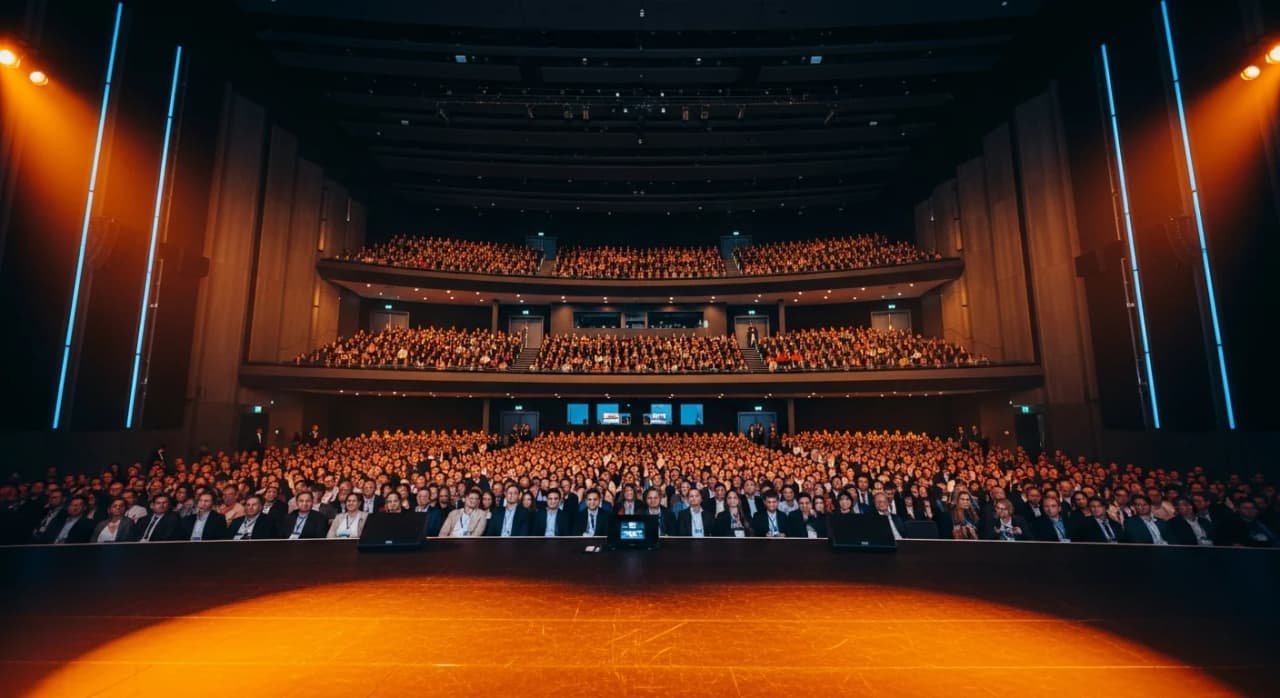
380 people watched us automate LinkedIn outreach with an AI agent. Here's what happened.
On May 3rd 2026, we hosted a live webinar to demonstrate how AI agents are changing LinkedIn outreach. 380 people showed up. The format was simple: live demos, a real cost breakdown, and open Q&A.
The session wasn't about showing features. It was about answering the question most B2B teams are asking right now: is AI-driven outreach actually better than traditional automation, or is it just marketing hype?
Here's what we covered and what the audience asked.
The core argument: sequences are the wrong abstraction
Traditional LinkedIn automation tools make you build sequences. Step 1: send connection request. Step 2: wait 3 days. Step 3: send message. Step 4: wait 5 days. Step 5: follow up.
The problem isn't that sequences don't work. It's that they're rigid. Every prospect gets the same sequence, regardless of context. Someone who accepted your connection request within an hour gets the same 3-day wait as someone who took 6 days. Someone who just posted about the exact problem you solve gets the same generic follow-up as someone who hasn't been active in months.
AI agents replace the sequence with decisions. The agent evaluates each prospect individually:
- Did they accept quickly? Message sooner.
- Did they just post about a relevant topic? Reference it.
- Are they a strong ICP match? Invest more personalization.
- Did they not accept after 7 days? Try a different approach or deprioritize.
This is the fundamental shift we demonstrated live: from "everyone gets the same steps" to "each person gets the right action at the right time."
What we demonstrated live
Demo 1: From zero to running campaign in 15 minutes
Starting with a blank BeReach account, we:
- Defined the target ICP (VP Sales at B2B SaaS companies, 50-500 employees)
- Created a campaign with the "find and qualify" strategy
- Set daily and total targets
- Activated the campaign
The agent immediately began finding prospects matching the criteria, reviewing fit, and queuing personalized connection requests. No sequence building. No template writing. No CSV uploading.
Demo 2: Engagement signal detection and response
We showed the agent detecting that a prospect had just commented on a relevant LinkedIn post. Within the demo window, the agent:
- Identified the comment and the post topic
- Read the prospect's profile
- Evaluated them against the campaign ICP
- Drafted a connection request that referenced the specific post
The audience saw the message the agent would send versus what a template-based tool would produce. The difference was obvious: one referenced the prospect's actual words, the other used {firstName} and {company}.
Demo 3: Test mode (no risk)
We ran the entire campaign flow in test mode - showing exactly what the agent would do before anything goes out. Every decision, every message, every action - visible and reviewable before anything was sent.
This addressed the biggest concern from the audience: "How do I trust an AI to help send my messages?" The answer: you don't trust blindly. You preview everything first.
The cost breakdown that surprised people
We walked through the real cost comparison:
The reaction was surprise that an AI agent approach costs less than most traditional sequence builders. The common assumption was that AI = expensive. In practice, BeReach includes the agent in every plan because it's more efficient than building campaign management infrastructure.
The questions that revealed what people actually worry about
"What if the agent sends something embarrassing?"
This came up in five different ways. The concern is real: letting an AI help with your professional reputation feels risky.
Our answer: start with test mode. Review everything the agent would do before it does it. As you build confidence, reduce oversight gradually. You can also set guardrails - topics to avoid, tone requirements, maximum messages per day. The agent operates within boundaries you define.
"How is this different from just using ChatGPT to write templates?"
ChatGPT generates text. An AI agent takes actions. The difference is that the agent doesn't just write a message - it decides who to message, when to message them, what to reference, and whether to follow up. The text generation is one step in a larger decision-making process.
Using ChatGPT to write better templates is valuable but doesn't address the fundamental problem: sequences treat every prospect the same. An agent treats each one differently.
"Does the agent respect sensible sending limits?"
Yes. The agent works within reasonable usage limits and keeps a respectful pace, with personalized messages rather than repetitive blasts. You can also set your own ceilings - maximum messages per day, topics to avoid, tone requirements - and the agent stays within the boundaries you define.
"Can I see what it's doing in real time?"
Yes. Every action the agent takes is logged - which prospects it found, which it qualified, what messages it drafted, what was sent. You can review the complete activity at any time. This was visible in the live demo and addressed most transparency concerns.
What we learned from the audience
The webinar confirmed something we'd suspected: most teams aren't choosing between AI agents and traditional automation. They're choosing between continuing to manage outreach manually and trying automation for the first time.
The majority of attendees were running LinkedIn outreach by hand - visiting profiles manually, writing each message individually, tracking everything in spreadsheets. For them, the question wasn't "AI agent vs sequence builder?" It was "should I automate at all?"
The live demo helped because it showed the before-and-after tangibly. Not in a feature comparison table, but in real-time: here's the manual process, here's what the agent does, here's the result.
If you missed the webinar and want to see the agent in action, try BeReach free - the free plan includes the AI agent so you can test the approach with your own ICP before committing.
Every viral post is 100+ warm conversations waiting.
Tell your agent who you want to reach. It finds leads, qualifies them, sends personalized outreach, and follows up.
Frequently asked questions
What's the difference between an AI agent and a LinkedIn sequence builder?
A sequence builder follows fixed steps you define: send request on day 1, message on day 4, follow up on day 10. Every prospect gets the same sequence. An AI agent makes decisions per prospect: evaluating fit, choosing when to reach out, personalizing based on their actual activity, and adapting based on their response. The agent replaces the sequence with contextual judgment.
How much does AI-driven LinkedIn outreach cost?
BeReach includes AI agent capabilities starting at EUR49/month for one LinkedIn account. This is less than most traditional sequence builders (Expandi $99/month, Salesflow $99/month). Enterprise AI SDR tools (11x.ai, Artisan) cost $1,000+ per month. For teams focused on LinkedIn specifically, BeReach offers the most affordable entry point to AI-driven outreach.
Is the webinar recording available?
The full webinar was live-only but the key demonstrations and insights are covered in this recap. To see the AI agent in action with your own use case, you can sign up for BeReach's free plan and test campaigns in test mode - this replicates everything shown in the demo without sending any real messages or using credits.
Can I try the AI agent before sending anything for real?
Yes. BeReach includes a test mode that shows exactly what the agent would do without sending anything. Every prospect it would find, every message it would write, every action it would take - visible and reviewable with zero risk. This was the most popular feature demonstrated in the webinar and addresses the trust concern most teams have when starting with AI-driven outreach.