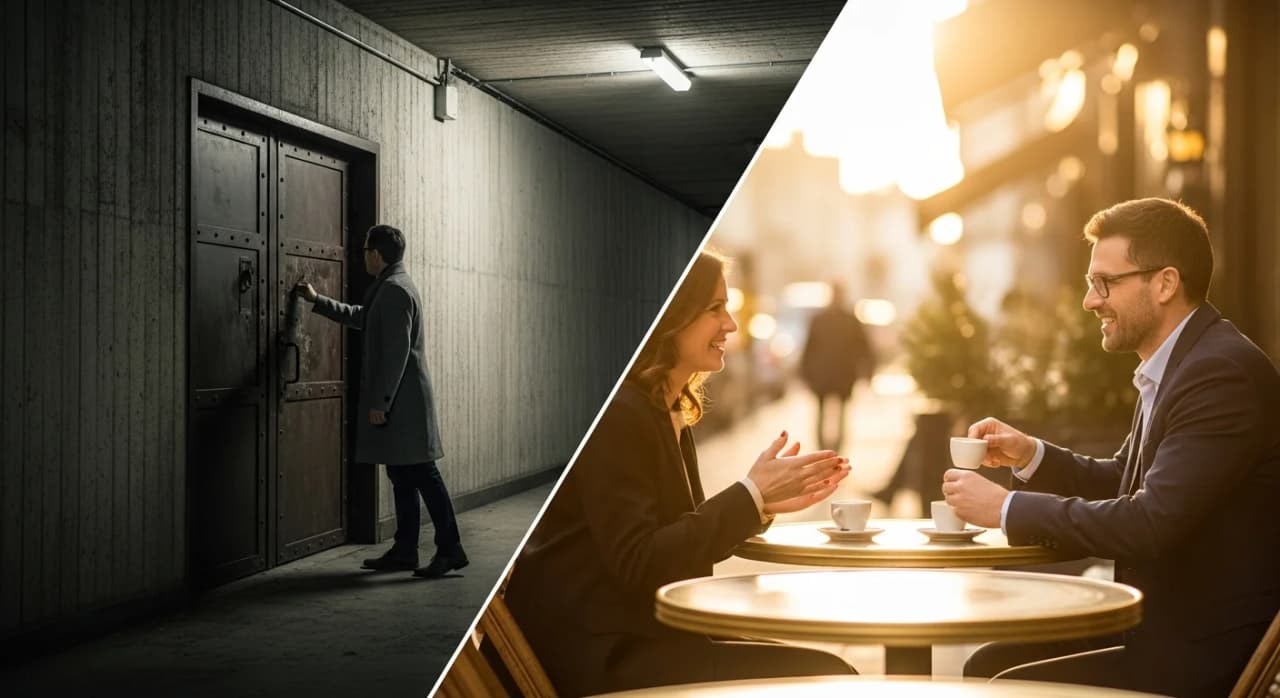

Everyone optimizes the message. The problem is usually everything else.
When LinkedIn reply rates are low, the instinct is to rewrite the message. Try a new opening line. Add a clever hook. A/B test the call-to-action.
That's usually the wrong lever.
Belkins' 2025 study of 20 million LinkedIn outreach attempts across 13,000 accounts found that the biggest performance gaps aren't between good and bad messages. They're between good and bad targeting, between cold and warm approaches, and between single-touch and multi-touch sequences.
The data is clear: a mediocre message sent to the right person at the right time outperforms a brilliant message sent cold to someone who's never heard of you.
Here are the three changes that have the biggest impact on reply rates, ranked by the data.
Change 1: Warm them up before you message (143% improvement)
This is the single highest-leverage change you can make.
The Belkins data shows that sending a message after visiting someone's profile achieves an 11.87% reply rate. Sending the same message without the profile visit: 4.88%. That's a 143% improvement from one additional action.
Why profile visits work
When you visit someone's LinkedIn profile, they see your name and headline in their "Who's Viewed Your Profile" section. When your message arrives hours or days later, you're not a complete stranger. There's a moment of recognition - "oh, I saw this person checked out my profile."
This mirrors how networking works in the real world. You notice someone at an event, they notice you, then you approach. It's not a cold interruption.
The multi-touch warm-up
The improvement compounds with additional touchpoints:
Each additional touch adds roughly 1 percentage point. Five touches before messaging generates 5x the replies of a single cold touch.
What a warm-up sequence looks like
- Day 1: Visit their profile
- Day 2-3: Like one of their posts (not their entire feed - one)
- Day 3-4: Leave a genuine comment on something they posted
- Day 5: Send connection request (without note)
- On acceptance: Send personalized message
This turns a cold prospect into someone who's seen your name three times before receiving your message. The difference in response is dramatic.
Change 2: Fix your targeting (reply rates vary 3x by audience)
The Belkins study revealed massive performance gaps by industry and role:
Reply rates by industry
SaaS has the lowest reply rate because these professionals receive the most automated outreach. They've developed what the Alsona team calls "immunity to templated messages." If you're selling to SaaS companies, you need the warm-up sequence from Change 1 more than anyone.
Reply rates by job function
Salespeople are the hardest to reach on LinkedIn (6.32%). They know every trick because they use them. HR and product people are 2x more responsive.
Geographic performance
Southern Europe responds at nearly double the rate of the Middle East. If your product works in multiple markets, this data should influence where you focus outreach resources.
What this means
If you're getting 5% reply rates while targeting SaaS sales leaders in the US, you're not underperforming. You're fighting the hardest audience on the platform. The same message targeting operations leaders in Southern Europe would likely get 10%+.
Before rewriting your message, check whether your audience is realistic for the reply rates you expect.
Change 3: Shorten your message and strengthen your ask
Now we get to the actual message. The data here is more nuanced than "personalize more."
Length matters more than you think
Messages under 400 characters get 22% better response rates than longer ones (per The Interview Guys' analysis of 47 LinkedIn messaging studies). That's roughly 2-3 sentences.
The instinct is to explain everything: who you are, what you do, why you're reaching out, what the prospect would gain, and a CTA. All of that in one message. The result is a wall of text that prospects scan and skip.
Shorter messages work because they feel like conversations, not pitches. "Saw your post about scaling outbound - we ran into the exact same challenge last quarter. Mind if I share what worked for us?" beats a five-paragraph introduction every time.
Personalization: what moves the needle
Messages that mention specific achievements or shared connections see a 27% higher response rate (per aggregated LinkedIn messaging research). But not all personalization is equal.
Low-impact personalization: "I noticed you work at {company} in {industry}." (This is just reading their headline.)
High-impact personalization: "Your comment about SDR burnout in {author}'s thread raised something we've been wrestling with too." (This references specific activity and shows you actually engaged.)
The difference: low-impact personalization proves you can read. High-impact personalization proves you paid attention.
The follow-up that most people skip
Multi-step sequences (2-3 follow-ups) can boost response rates to 20-30% (per Alsona's 2025 benchmarks). Most salespeople send one message and give up.
The follow-up doesn't need to be a repeat of the first message. It should add value:
- Share a relevant article or case study
- Reference something new in their feed
- Ask a lighter question ("Curious if this resonated - no pressure either way")
Timing: wait 5-7 days between follow-ups. More than three total messages crosses into persistence that damages your brand.
The math: how these changes compound
Let's say you're currently running cold outreach to SaaS sales leaders with a single message, getting a 4% reply rate.
- Add warm-up sequence (profile visit before messaging): 4% -> ~9.5% (143% improvement)
- Adjust targeting to include operations/product roles: 9.5% -> ~12% (higher-responding audience)
- Shorten messages, add follow-up sequence: 12% -> ~16% (better conversion on each touch)
That's a 4x improvement without changing a word of your core value proposition. You're reaching the right people, warming them up, and communicating concisely.
Tools like BeReach help you run the warm-up sequence so more of these messages turn into replies. BeReach handles the profile visit, the post engagement, and the well-timed message - the exact multi-touch approach the Belkins data shows working. At EUR49/month, it's cheaper than most tools that skip the warm-up entirely.
Every viral post is 100+ warm conversations waiting.
Tell your agent who you want to reach. It finds leads, qualifies them, sends personalized outreach, and follows up.
Frequently asked questions
What's a good reply rate for LinkedIn outreach in 2026?
Based on Belkins' 2025 study of 20 million outreach attempts: 10-12% is average for warm campaigns, 7-8% for cold. Above 15% is strong, above 20% is exceptional. Industry matters significantly - legal and healthcare see 9-10% while SaaS averages 4.77%. If you're consistently below 5%, focus on targeting and warm-up sequences before optimizing your message copy.
How long should a LinkedIn outreach message be?
Under 400 characters (roughly 2-3 sentences). Research across 47 LinkedIn messaging studies shows shorter messages get 22% better response rates. Lead with a specific observation, not a self-introduction. Ask one clear question. Save the detailed pitch for the reply conversation. Messages that feel like conversations outperform messages that feel like sales emails.
How many follow-up messages should I send on LinkedIn?
Two to three follow-ups after your initial message, spaced 5-7 days apart. Multi-step sequences can boost response rates to 20-30% (from typical 10-12% single-message rates). Each follow-up should add value - share a relevant resource, reference new activity, or ask a lighter question. Beyond three total messages, you risk damaging your reputation.
Does visiting a profile before messaging really help?
Yes - it's the single highest-leverage change. Belkins data shows messaging after a profile visit achieves 11.87% reply rates versus 4.88% for messaging alone. That's a 143% improvement. The profile visit creates a "warm signal" - the prospect sees your name in their notifications before your message arrives. Adding more touchpoints (post likes, comments) further increases reply rates.
Why is my LinkedIn outreach to SaaS companies not working?
SaaS professionals have the lowest LinkedIn reply rates of any industry at 4.77% (Belkins 2025 data). They receive the most automated outreach and have developed pattern recognition for templated messages. To break through: use multi-touch warm-up sequences, reference specific content they've posted, keep messages under 400 characters, and consider targeting adjacent roles (product, operations) who are 2x more responsive.